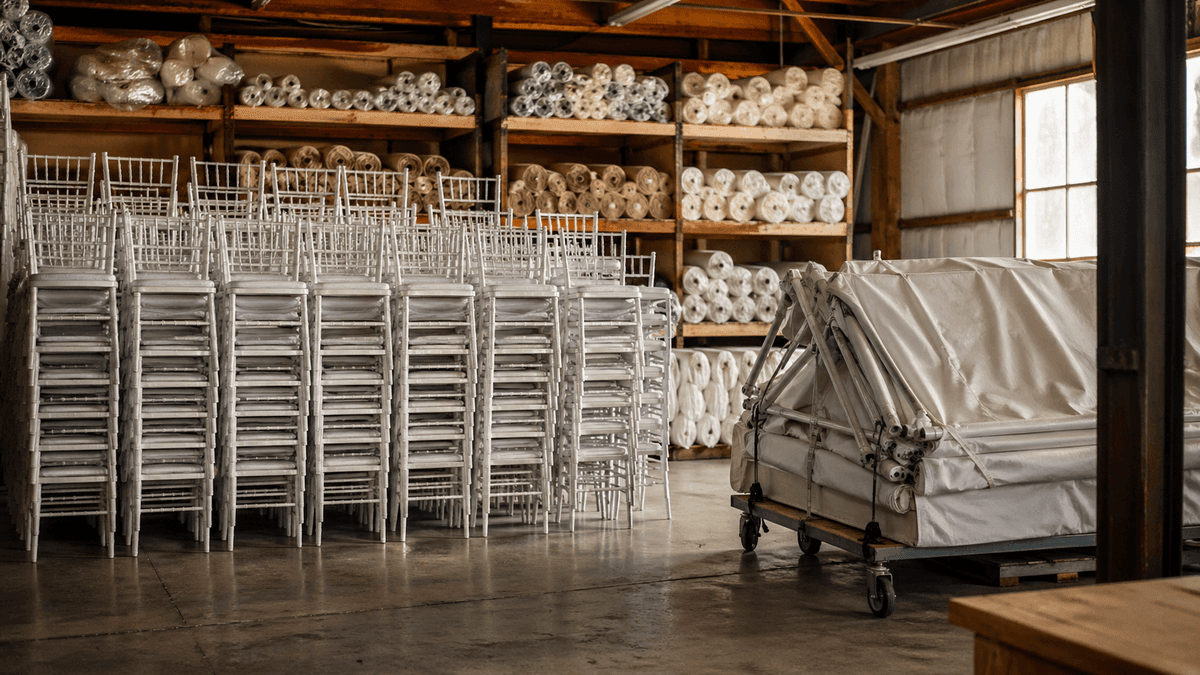
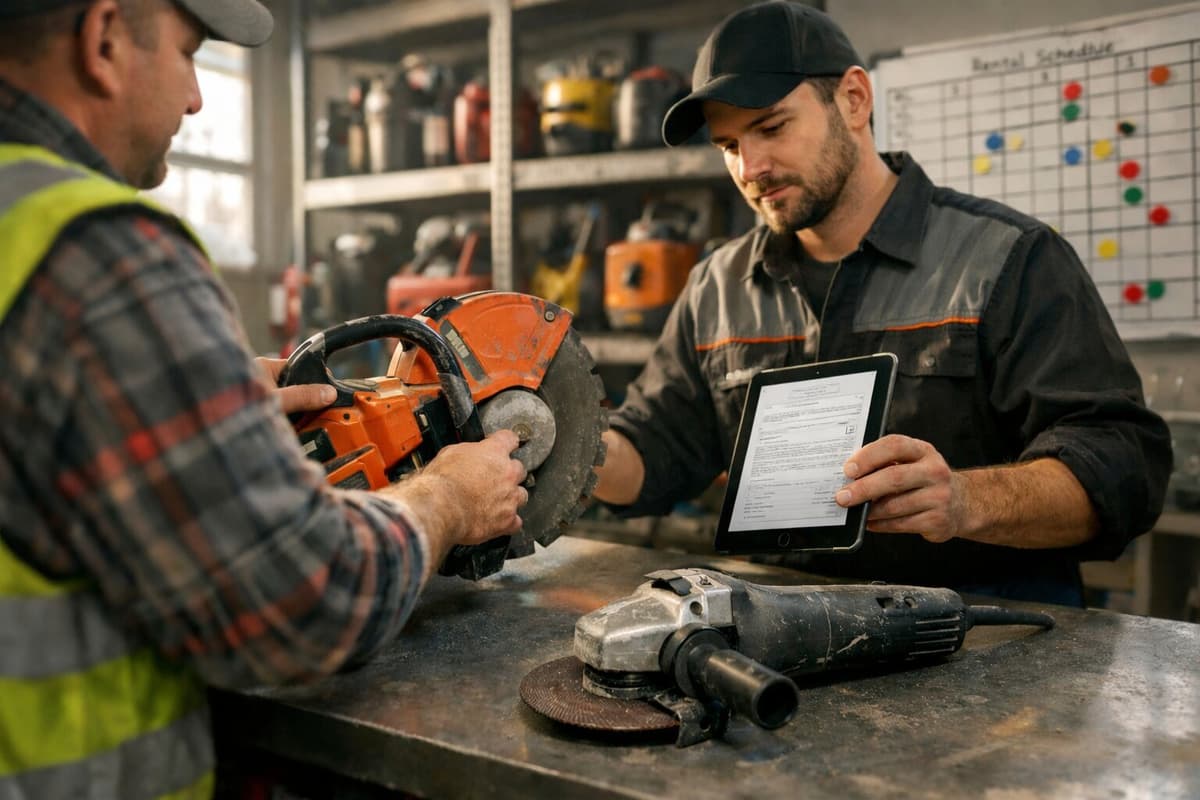
Brad opened an equipment rental business outside Denver three years ago. He invested $95,000. Plate compactors, saws, core drills, scaffolding - a full lineup for small renovation crews.
After the first year, he tallied up the losses. Three grinders came back with cracked housings, but nobody admitted to the damage. One rotary hammer never came back at all. Two compactors had their blades swapped out for cheap aftermarket replacements.
Total loss: $5,800. On paper, everything looked fine. As with most rental operations, the real cost of lost and damaged equipment was hiding in plain sight.
Why a paper logbook is a recipe for losses
Brad did what most rental operators do - a notebook at the front desk. Date, customer name, what they rented, when it's due back. Simple and proven. Or so he thought.
Problem number one: nobody checked the condition of equipment on return. A customer would drop off a compactor, Dave from the warehouse would write "returned" and put it on the shelf. No inspection, no photos, no comparison with how it looked at checkout.
Problem number two: no history. A grinder came back damaged after its third rental in a row. Who broke it - the first, second, or third customer? The notebook couldn't tell you. It only recorded dates.
Problem number three: late returns that nobody catches. A customer was supposed to bring back a concrete mixer on Monday. It's Wednesday. The notebook still shows Monday's return date. Nobody called because nobody checked.
Five mistakes that cost rental businesses thousands
Mistake 1: No condition documentation at checkout
You hand equipment to a customer without photos or a condition report. It comes back with a scratch on the housing. Customer says "it was already like that." You say "no it wasn't." Your word against theirs.
The fix is simple - photos at checkout. Takes 30 seconds, saves hours of arguments.
Take 3-4 photos of each piece of equipment at checkout - front, back, control panel, power cord. Save them to the specific rental record. On return, you compare condition in 2 minutes.
Mistake 2: No condition check on return
A customer drops equipment in the warehouse and says "I'm returning this." The staff member nods. Nobody powers it on, nobody inspects it, nobody looks it over.
Two weeks later, the next customer picks up that same grinder. Calls after an hour - "it doesn't work, the disc is jammed." Now you've got a complaint from a customer who did nothing wrong, and equipment that needs repair. And who broke it? Too late to find out.
Mistake 3: Tracking return dates manually
You've got 40 pieces of equipment in circulation. Each with a different return date. Every morning, you should be checking who's late.
But do you actually do that? On Monday - yes. On Tuesday - "later." Wednesday you forget. Thursday a customer calls asking for a concrete mixer, and it should have been back three days ago, but nobody was tracking the return.
Mistake 4: Not tying equipment to a specific person
"XYZ Construction rented a core drill." Great. But who specifically picked it up? Who's responsible for damage? When a "company" signs for it, nobody feels personal accountability.
Mistake 5: Pricing by gut feel instead of data
How many times per month is a given compactor rented out? What's its quarterly maintenance cost? Is it earning its keep, or just sitting there losing value?
Without that data, you're pricing by instinct instead of by the numbers. And then you wonder why heavy equipment is losing money even though it's "always rented out."
How to control equipment returns without hiring extra staff
Brad first tried the staffing solution - he hired someone to manage checkouts and returns. Cost: $3,500 a month. They called in sick, took vacation, forgot things. After three months, he pulled the plug.
His second approach was technological. Every piece of equipment got a QR code. At checkout - scan and photos of the condition. At return - scan, photos, comparison based on a proper equipment rental contract. The system automatically tracks due dates and sends text reminders the day before a scheduled return.
Before the system: $5,800 in annual losses, 3-4 customer disputes per month, 2 hours daily on paperwork. After implementation: $1,050 in annual losses, 1 dispute per quarter, 20 minutes daily on operations.
The biggest change? Customers started taking better care of equipment. When they know the condition is documented with photos and tied to their name, housings suddenly stop "cracking on their own."
What it costs to run a rental business without a system
Let's do the math for a rental operation with 80 items worth $100,000 total.
Without a system, you lose annually:
- Damage with no one to bill: $2,000 - $3,800
- Unreturned equipment: $1,200 - $3,000
- Late returns (lost rental days): $1,500 - $2,500
- Time spent on manual paperwork: $3,800 - $5,000 (labor cost)
Total: $8,500 - $14,300 per year. A system that solves these problems costs a fraction of that.
How to run an equipment rental business in 2025
A modern rental operation needs three things: equipment identification (QR codes), condition documentation (photos), and automated tracking (an online system).
Start by tagging your equipment. Every item gets a QR code - durable, laminated, stuck in a protected spot. Scanning with a phone gives instant access to the history: who had it, when, what condition it came back in.
Next, establish a checkout procedure. Scan the code, take 3-4 photos of the condition, get the customer's signature on the phone. Takes 2 minutes, eliminates 90% of disputes.
Finally - automated reminders. The system sends a text the day before the return date. The customer knows, and your staff doesn't have to remember. If there's a delay - another text and automatic late fees kick in.
Your rental business, under control
Toolero tracks rentals, monitors returns, and documents equipment condition. 14 days free.
What Brad did
Brad implemented the system a year and a half ago. Today he has 120 pieces of equipment, two employees, and zero paper notebooks.
Every return takes 5 minutes - scan, inspection, photos, comparison with checkout condition. Customers know everything is documented, so they take care of the equipment. Disputes about damage? The last one was five months ago - and it was resolved in a minute because the system had photos from both sides.
Annual losses dropped from $5,800 to $1,050. Brad says his only regret is that he didn't start sooner.
Running a rental business? Calculate what a lack of control is costing you. The answer will probably surprise you - just like it surprised Brad.