
Friday, 4 PM, a housing development site outside Atlanta. Site manager Andy does his walkthrough before the weekend. A $1,100 cross-line laser - gone. He asks the crew.
Tom: "I returned it Wednesday, gave it to Derek." Derek: "Tom gave it to me, but I passed it to Kevin on the second floor." Kevin: "I don't remember. Maybe I left it in the van."
It's not in the van. It's not on site. Nobody knows who had it last. Nobody signed any handover form. Andy buys a new one on Monday.
Three weeks later, the laser turns up in a cabinet on a different job site. The company eats the cost of the duplicate. But who was supposed to know?
Why the honor system breaks down past 5 people
On a small crew - 3 or 4 workers - verbal agreements sort of work. You see who takes what. You remember who last used the grinder. You keep track naturally.
At 10 workers, things start slipping. At 20 - chaos. At 50 - open warfare.
The problem isn't that people have bad intentions. The problem is memory. Nobody remembers what they took three weeks ago. Nobody remembers who they handed a tool to during the Friday rush. And nobody will admit to losing something if there's no proof they were the last one holding it.
Construction companies without a formal checkout system lose an average of 8-12% of their tool inventory value per year. With 200 tools worth $75,000, that's $6,000 - $9,000 in annual losses that nobody accounts for.
What a tool handover protocol should include
A handover protocol is a document confirming that a worker received a specific tool and accepted responsibility for it. It doesn't need to be complicated - the simpler it is, the better the odds that people will actually use it.
Key elements:
Tool identification - not just "drill," but "Bosch GBH 2-26 rotary hammer, asset number RH-047." Without unambiguous identification, the protocol is worthless. Someone will say "I had a different drill" - and you can't prove otherwise.
Condition at checkout - working, minor wear, needs attention (specify what). If you're handing out a tool with a scratch on the housing, document it. Otherwise the worker will say "it was already like that" when they return it.
Date and time of checkout - because "I took it last week" isn't good enough. A date lets you establish who had the tool when the damage occurred.
Worker's signature - physical or digital. This is the key legal element. Without a signature, the protocol is information, not a document.
Expected return date - optional, but helpful. The worker knows they need to return it by Tuesday. The supervisor knows to check on Wednesday.
Paper forms vs digital sign-out
A traditional paper form has one advantage: everyone understands it. Paper, pen, signature. Simple.
It also has several serious drawbacks. Papers get lost - especially on job sites. Searching for a specific entry in a stack of forms takes forever. A supervisor on a different site can't check who has a tool. And nobody is going to drive to the office for a form just to borrow a drill for half an hour.
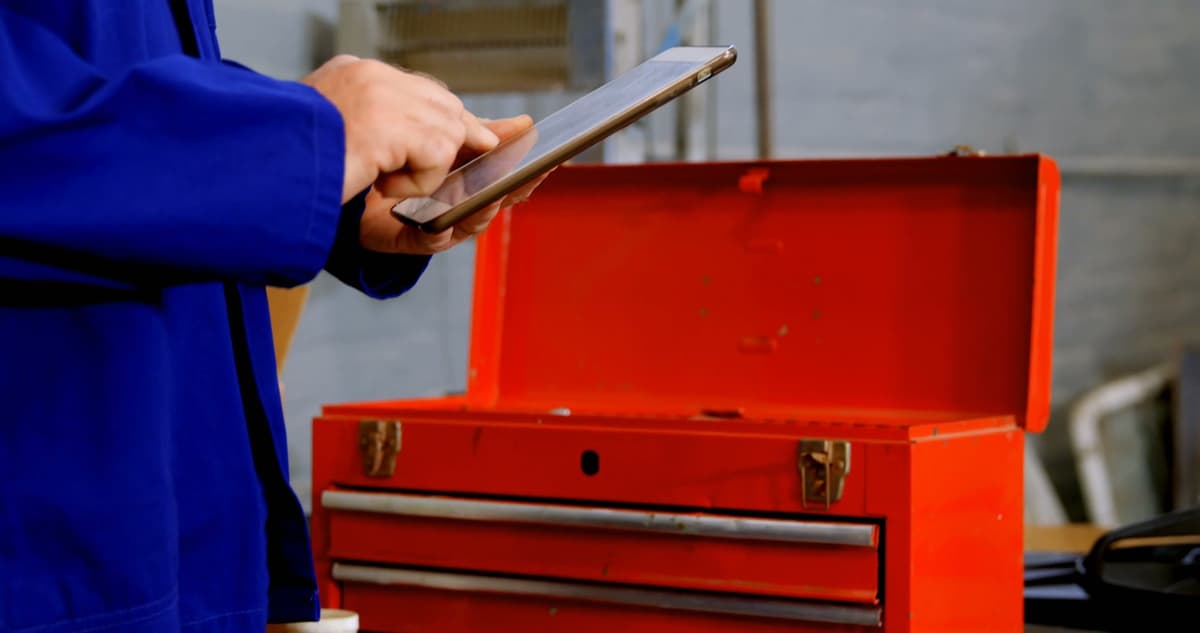
A digital sign-out solves these problems. The worker scans the QR code on the tool and confirms checkout with one tap. The system records who, what, when - automatically. The supervisor can see on their phone that laser WL-012 has been with Tom since Tuesday. No calling around, no asking, no digging through paperwork.
Employment law in most states allows employers to hold workers accountable for company property entrusted to them. The key requirements: proper handover documentation and the worker's ability to safeguard the item. A digital system with checkout confirmation meets these requirements - often better than a paper form, because it's harder to dispute.
Employee accountability for tools
Here, the law is clear: a worker is responsible for property entrusted to them, provided it was properly handed over and they had the ability to safeguard it. We cover the two legal frameworks for employee liability for tools - including limits, requirements, and common employer mistakes - in a separate in-depth guide.
What does this mean in practice?
If Tom signed a handover form for the laser and the laser goes missing - Tom is accountable. He can be released from liability if he proves the loss occurred due to circumstances beyond his control. But the burden of proof is on him.
If the laser gets passed around between people without any documentation - nobody is accountable. Because nobody can prove who had it last. And that's exactly the situation at most construction companies.
The crucial point: accountability isn't punishment. It's a clear framework. People take care of things they're responsible for. Not because they fear consequences - because they know it's on them. That principle alone is one of the most effective ways to prevent tool loss on construction sites.
How to roll out a sign-out system without a crew mutiny
Introducing handover protocols usually gets one of two pushbacks: "I don't have time for bureaucracy" or "the boss doesn't trust us."
Both are valid - if the system is poorly implemented.
Step 1: Start with a conversation, not a mandate
Gather the crew. Be upfront: "This year we lost $X in tools. That's money that could have gone toward bonuses, better equipment, or new tools. I want to change that - not to micromanage you, but to stop throwing money away."
People understand the financial argument. Especially when you show concrete numbers.
Step 2: Make it dead simple
The checkout process has to take seconds, not minutes. If it requires filling out forms, printing documents, signing in three places - nobody will do it. And they'd be right.
The best system is scanning a QR code with your phone + one tap on "checking out." Three seconds. Same time it takes to unlock your phone.
Step 3: Be consistent, but human
The first month is a transition period. Someone forgets to scan - remind them, don't penalize. Someone returns a tool late - ask why, don't write them up.
But from month two, expect consistency. No exceptions. When some people have to scan and others don't - the system collapses within a week.
A contractor in Texas: from 15 missing tools a month to zero
Adam's construction company: 35 workers, 4 crews, 3 active job sites. Before implementing a sign-out system - an average of 15 missing tool reports per month. Not big-ticket items - hammers, levels, laser measurers. But the annual total added up to a painful number.
Adam introduced digital handover protocols. Every tool over $50 got a QR code. Every checkout - a scan. Every worker can see "their" tools on their phone.
Month one: 8 missing tool reports (a 47% drop). People started checking "their" lists before filing a report.
Month two: 3 reports. Workers started keeping track of "their" tools.
Month three: 1 report - a tool actually damaged on site. Zero missing items.
Eight months have passed since then. Average: 0-1 missing tool reports per month. Adam says the biggest change wasn't the technology - it was the shift in mindset. "When everyone knows what's theirs, it suddenly stops being nobody's."
If you want to digitalize your handover process — scan a QR code, tap to confirm, and have a full checkout history on your phone — try Toolero. Free for 14 days, no credit card required.
Where to start tomorrow
You don't need a full IT system right away. Start with simple steps.
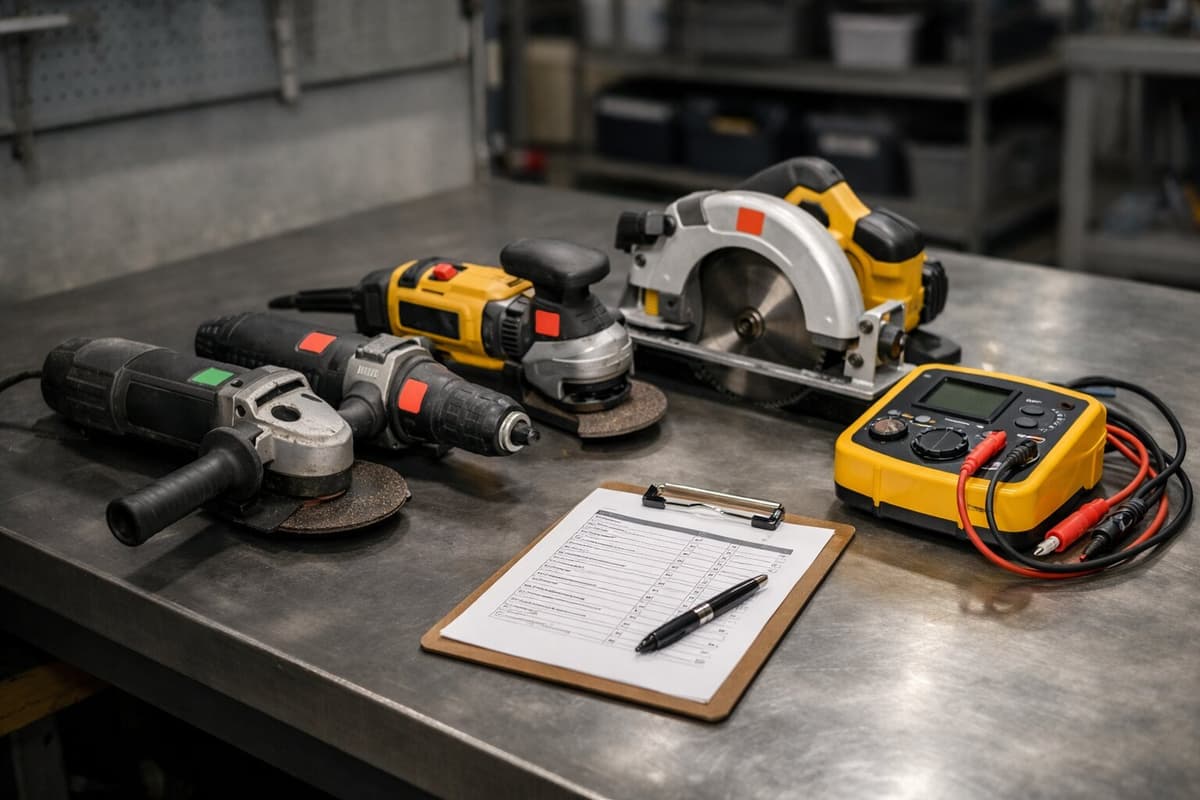
Make a list of tools worth over $100. Assign each one an asset number. Print a simple table: number, name, who took it, date, signature. Post it in the tool room.
It's not a perfect system. But it's infinitely better than nothing.
Once you see how many times that table helps you figure out who had a tool - you'll want something better yourself. And that's when it makes sense to move to QR codes and digital protocols, where scanning takes 3 seconds and the history is accessible from your phone.
Andy from the beginning of this article implemented a system four months ago. I recently asked him about missing tools. He answered: "What missing tools? I know where every piece of equipment is at all times." Then he added: "My only regret is not starting two years ago. I did the math - I would have saved $15,000."