An OSHA inspector walks into Greg's remodeling company in Cleveland. He asks for documentation on power tool inspections. Greg opens a drawer. The last inspection report is dated two years ago.
"And the current inspections?" the inspector asks. Greg says nothing. He hadn't done them. He didn't know he had to. Or he knew, but "there was never time."
Fine: $4,500. Plus an order to immediately pull 12 power tools from service until they're inspected. The crew sits idle for two days waiting on inspections.
Total cost of one missed deadline: over $12,000.
Which tool inspections are mandatory
Let's start with the basics, because there's enormous confusion on this topic.
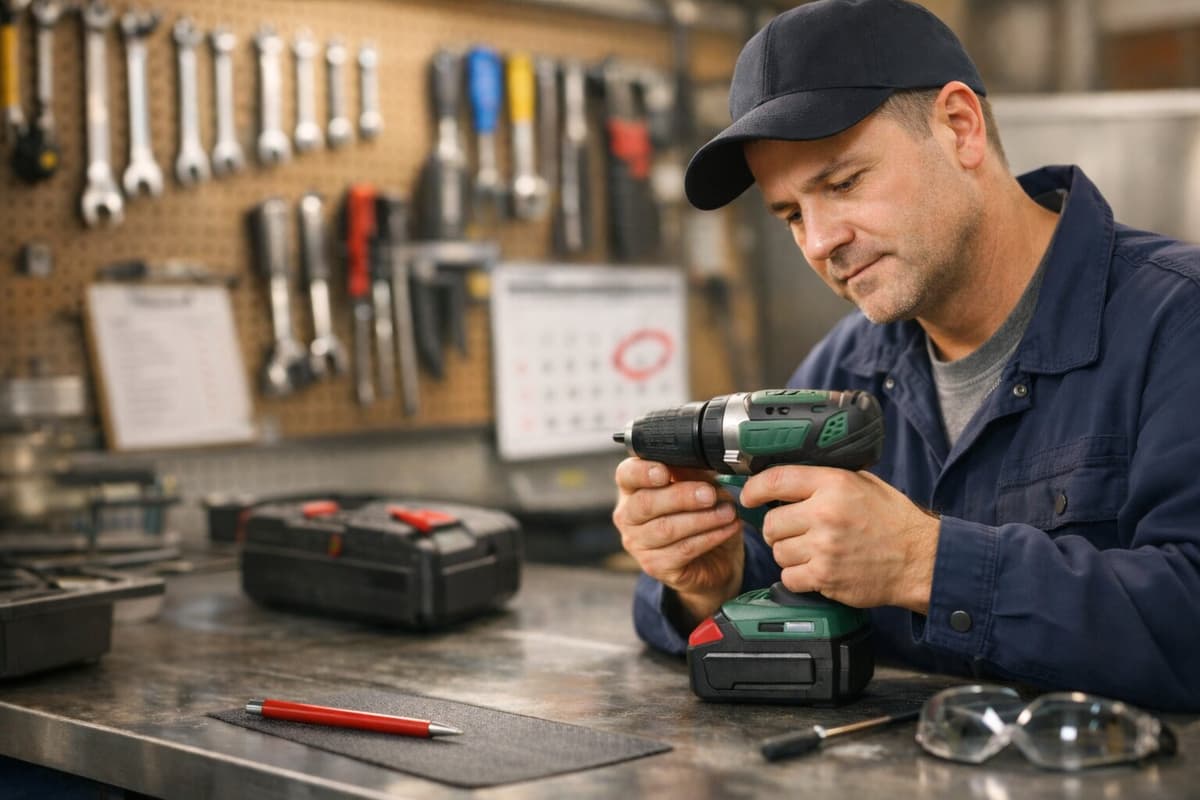
Power tools (drills, grinders, saws, rotary hammers) — require periodic inspections per OSHA standards and NFPA 70E requirements. Employers are legally responsible for ensuring tools are technically sound and safe to use.
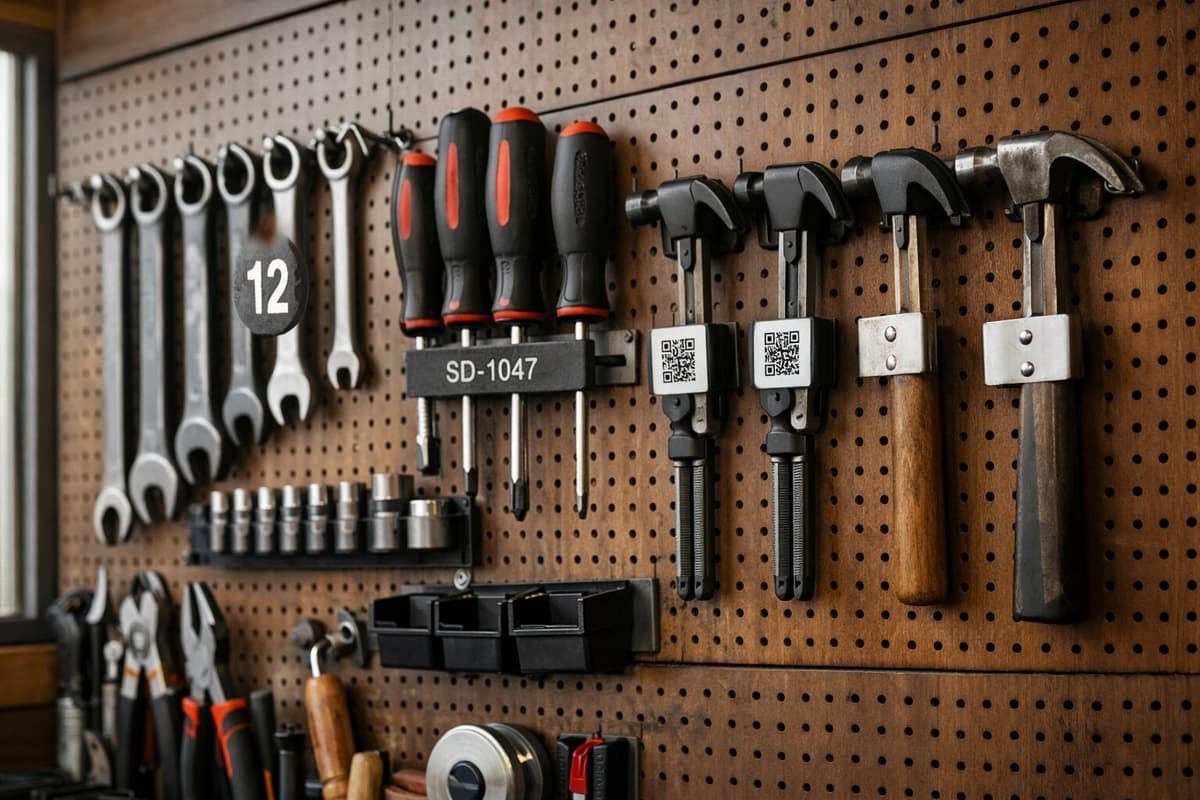
Hand tools (hammers, wrenches, screwdrivers) — don't require formal inspections, but the employer is still liable for their condition. A cracked hammer or a chipped wrench is a hazard — and the responsibility falls on you, not the worker.
Measuring equipment (lasers, levels, rangefinders) — requires calibration per manufacturer specifications. An inaccurate laser on a job site isn't just poor workmanship — it's a potential safety hazard.
OSHA's General Duty Clause (Section 5(a)(1)) requires employers to maintain a workplace free from recognized hazards, including defective tools. OSHA penalties for serious violations can reach $16,131 per violation. If a worker is injured by a faulty tool — criminal liability is on the table.
How often should you inspect power tools
There's no single universal answer — it depends on usage intensity and working conditions. But there are concrete guidelines.
Every 6 months — power tools used daily in construction conditions (dust, moisture, drops). Drills, angle grinders, rotary hammers, circular saws.
Every 12 months — power tools used occasionally or in workshop conditions. Stationary drill presses, bench grinders, band saws.
Before each use — tools that have been sitting idle for more than 3 months, after a repair, after long-distance transport.
After any incident — a drop, water exposure, mechanical damage. Even if it "looks fine."
What an inspection covers
A basic power tool inspection includes:
- External visual check (housing, cord, plug, switches)
- Insulation resistance measurement (megohmmeter)
- Ground continuity test
- Load test under operating conditions
- Safety feature check (emergency shutoff, guards)
The inspection report must include: date, tool ID number, scope of inspection, result, and the inspector's signature. Without a report, the inspection doesn't officially exist.
Why companies skip inspections (and what it costs them)
The usual excuses: "no time," "the tools work so why bother," "too expensive," "nobody checks."
Someone does check — OSHA conducts tens of thousands of inspections every year. And "the tools work" is only a valid argument until the first accident.
But even setting aside regulations and safety — regular inspections make financial sense.
A power tool without inspections wears out faster. Carbon brushes worn down? Without an inspection, nobody notices — the motor runs under more strain, overheats, fails. Repair: $200. Replacing the brushes at inspection: $15. In maintenance departments at manufacturing plants, missed inspections are one of the biggest causes of unplanned downtime.
Cost to inspect one power tool: $10–$25. Cost of a tool failure without inspection: $100–$600 (repair or replacement) + downtime cost. With 50 power tools, regular inspections cost $1,000–$2,500 per year. One avoided breakdown covers half that amount.
How to set up a maintenance schedule
Here's a practical framework that works for companies with 20 to 200 tools.
Step 1: Tool list with dates
Start with what you have. For every power tool, record: name, ID number, date of last inspection (or "none"), date of next inspection, person responsible.
If you have no existing records — don't panic. Do an inspection now and maintain regular documentation from this point forward.
Step 2: Divide into groups
Don't inspect everything on one day — you'll lose half your tools for an entire day. Split them into groups of 10–15 and stagger them over time.
Example for a company with 60 power tools (inspection every 6 months):
- January: Group A (15 tools)
- February: Group B (15 tools)
- March: Group C (15 tools)
- April: Group D (15 tools)
- July: Group A again
- ...and so on
This way you never lose more than 15 tools at the same time.
Step 3: Choose who does it
You have two options.
In-house inspection — if you have someone with the proper electrical testing certifications. Cheaper, faster, flexible scheduling. You'll need a megohmmeter ($300–$1,200) and the expertise.
External service company — if you don't have certified personnel. More expensive, but no risk of errors. Look for companies that inspect on-site — shipping tools out means extra days without them.
Step 4: A reminder system
And here's the crux of the problem. Greg from the beginning of this article knew he should be doing inspections. He simply forgot. For two years.
A phone calendar? Might help. An Excel file with dates? Requires manual checking. A tracking system with automatic alerts? It sends a notification one month before the deadline, one week before, one day before. You don't forget, because the system won't let you.
Repair vs. replace — making the call
During an inspection, a tool needs repair. The question: is it worth fixing, or should you buy new?
The 60% rule: if the repair cost exceeds 60% of the price of a new tool — buy new. A repaired tool is never as good as a new one, and the next failure will come sooner.
Exception: premium equipment. A Hilti core drill worth $2,500 that needs a $600 motor replacement? Repair it. A no-name grinder that cost $90 with a $55 repair? Buy new.
Second exception: availability. If a new tool takes 3 weeks to arrive but a repair takes 2 days — repair it and order the replacement. Production can't wait.
Service documentation
Every repair should be recorded: what was fixed, how much it cost, who did the work, what warranty applies. Why?
Because a tool repaired three times in a year is a tool that needs replacing. But without a history, you don't know it's the third time. You think "something happened once." Then you look at the data and see: five repairs in 18 months, total cost higher than the price of a new one.
How to manage it all in practice — a tracking system with deadlines
The solution that ties together tracking, maintenance schedules, and service history is an online system. Not because it's trendy — because a human simply cannot keep track of all this mentally with 50+ tools.
The system does three things:
Tracks deadlines — you know when every tool is due for inspection. You get notified in advance. No need to remember, no need to check manually.
Builds history — every inspection, every repair, every part replacement. In one place, tied to a specific tool. You open the record for drill DR-047 and see: purchased January 2023, inspection July 2023 — OK, inspection January 2024 — brushes replaced, inspection July 2024 — OK. Full picture in 5 seconds.
Helps with decisions — you see which tools break down most often, how much their maintenance costs, when replacement is cheaper than another repair. Decisions based on data, not gut feeling.
What Greg did after the fine
Greg from Cleveland — the one with the $4,500 fine — needed a week to recover. Then he moved fast.
He ordered inspections for all 45 power tools. Cost: $900. Three tools needed replacing, two needed repair, the rest were fine.
He set up a tracking system with a maintenance schedule. Every tool now has a next inspection date. The system sends him a reminder a month in advance.
A year has passed since then. Zero fines. Zero breakdowns from neglect. And Greg says: "If I'd spent that $900 a year earlier, I would've saved $12,000 on fines and downtime. Most expensive lesson of my career."
Do your tools have current inspections? If you need more than 3 seconds to answer — you already know.