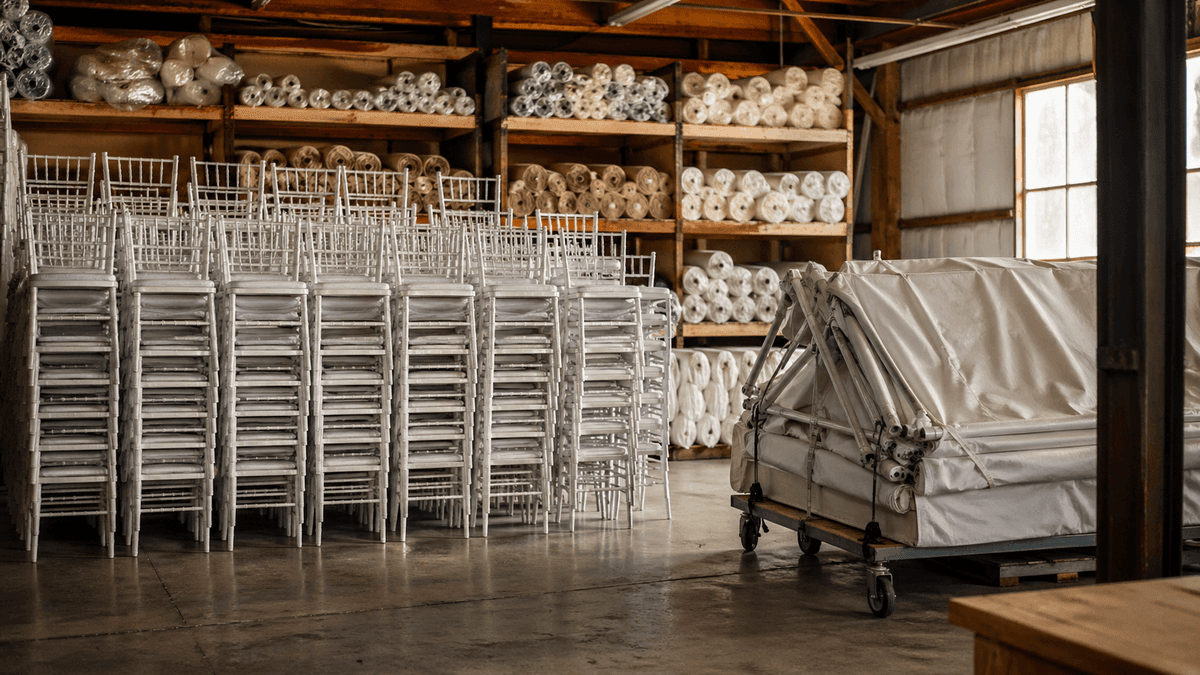
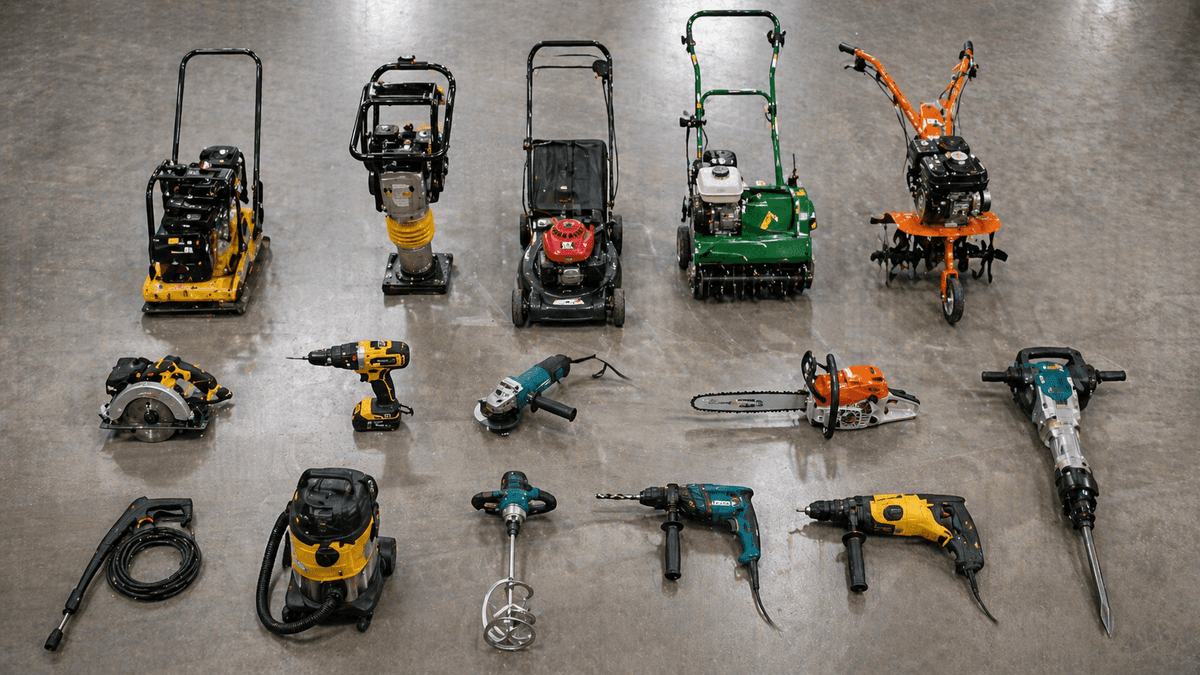
A rental shop near Phoenix runs a 47-unit fleet. Annual revenue: $172,000.
Once we calculated utilization rate per unit, the picture was stark. Twelve machines generate 78% of revenue. The next twelve generate 18%. The remaining 23 machines — averaging 8 days rented per year — generate just 4% of revenue while occupying half the warehouse and consuming a third of insurance, service, and capital costs.
This isn't an unusual situation. It's the typical distribution that shows up in nearly every rental fleet — provided someone bothers to measure it.
Most owners don't measure. They look at total revenue, rental count, customer footfall. But per-unit utilization rate — what the global rental industry treats as a foundational KPI — is missing from American small-business rental conversations almost entirely. It's standard at corporate chains like Sunbelt and United Rentals. It's what separates a profitable independent yard from one that's quietly bleeding cash.
In this article, we'll calculate it together using realistic numbers for a typical American rental fleet.
What utilization rate is and how to calculate it
Utilization rate is the percentage of time a unit is earning — meaning rented out — relative to the total time it was available for rental.
Formula:
Utilization Rate = (Days Rented / Days Available) × 100%
"Days available" isn't 365. It's days the unit could have been rented, meaning:
- Minus service and repair days
- Minus unavailability days (returned damaged, waiting for parts)
- Counted from the day the unit entered your fleet
Say a dethatcher was in your fleet for 250 days, with 5 days in service. Available days: 245. Days rented: 87. Utilization rate: 87/245 = 35.5%.
Is 35.5% good? Bad? Depends on the equipment category — and that's where benchmarks come in.
Industry benchmarks — where you should be
The rental industry has fairly settled benchmarks for utilization. Here's the table for typical categories in the US small-shop market:
| Equipment category | Low utilization | Average | High |
|---|---|---|---|
| Hand tools (drills, grinders) | <20% | 25-40% | >45% |
| Construction (compactors, mixers) | <30% | 35-50% | >55% |
| Garden / seasonal | <15% annual | 20-30% annual (60-80% in season) | >35% annual |
| Event rentals (chairs, tents) | <10% | 15-25% | >30% |
| Heavy equipment (mini excavators, lifts) | <40% | 50-65% | >70% |
| Vehicles (trailers, vans) | <50% | 60-75% | >80% |
What do these numbers mean?
Low utilization = the unit is sitting. Either you have too many, you're not marketing it right, or your price is mismatched.
Average utilization = unit is working at a normal pace. Stable customer base, sensible pricing, no extremes.
High utilization = unit is frequently turned away to customers because it's already booked. That's a signal you need more units — every refused customer is revenue going to a competitor.
Above 90% utilization sounds attractive but it's a yellow flag. It means you're refusing a lot of customers. Ideal utilization sits at 75–85% — high enough that machines earn, low enough that you can always serve the next caller.
Worked example for 30 units — typical American rental fleet
Take a realistic small US rental: 30 units, 18 months in business, last 12 months revenue: $89,500.
After calculating utilization rate per unit, the data looks like this:
| Unit | Cost | Daily rate | Days rented | Utilization | Annual revenue |
|---|---|---|---|---|---|
| Wacker plate compactor | $5,200 | $80 | 198 | 56% | $15,840 |
| Kubota mini excavator | $26,500 | $280 | 156 | 44% | $43,680 |
| Toro dethatcher | $1,200 | $55 | 87 | 35% (season: 78%) | $4,785 |
| Honda rear-tine tiller | $1,950 | $70 | 92 | 37% (season: 82%) | $6,440 |
| Hilti rotary hammer | $2,400 | $60 | 76 | 22% | $4,560 |
| DeWalt angle grinder (1) | $350 | $25 | 42 | 12% | $1,050 |
| DeWalt angle grinder (2) | $350 | $25 | 38 | 11% | $950 |
| DeWalt angle grinder (3) | $350 | $25 | 31 | 9% | $775 |
| Werner extension ladder | $220 | $20 | 18 | 5% | $360 |
| Atlas concrete vibrator | $900 | $35 | 8 | 2% | $280 |
| ... remaining 20 units | avg 18% | $11,180 | |||
| Total | ~$78,000 | ~28% avg | $89,900 |
What does this table reveal?
Top 5 units (compactor, mini excavator, tiller, dethatcher, rotary hammer) generate 53% of annual revenue from 15% of fleet value.
Bottom 10 generates a meager 8% of revenue but represents 18% of fleet value and consumes a proportional share of fixed costs — warehouse space, insurance, capital tied up.
Three angle grinders is a classic mistake — bought "as a set," but in practice one would be enough.
What to measure alongside utilization — the full profitability picture
Utilization alone isn't enough. It tells you "is it working or not," but not whether it's worth it.
The second key metric is Revenue per Unit (RPU) — annual revenue from a single unit:
RPU = Days Rented × Average Daily Rate (after discounts)
For the Wacker compactor: 198 × $80 = $15,840. With a $5,200 purchase price and 5-year amortization ($1,040/year), the unit pays for itself in well under 5 months.
The third metric: Payback Period — how many months to earn back the purchase price:
Payback (months) = Purchase Cost / (RPU / 12)
For the compactor: $5,200 / $1,320 = 4 months. That's an excellent result. A healthy payback in the rental industry is 8–18 months for fast-turning units and 24–36 months for larger machines.
Fourth: gross margin per unit — what's left after direct costs (service, parts, depreciation, insurance):
Gross Margin = (RPU - Direct Costs) / RPU × 100%
A healthy rental shop runs gross margin per unit at 50–70%. Below 30% — you're hiring labor to maintain equipment that barely covers itself.
Utilization tells you "is it working." RPU tells you "how much it earned." Payback tells you "when it paid for itself." Gross margin tells you "is it actually worth it." Four metrics — full profitability picture for every single unit in your fleet.
Three decisions you'll make after calculating utilization
Decision 1: Sell anything below 8% utilization
A unit sitting 92% of the time isn't earning — it's generating costs. Insurance, warehouse space, tied-up capital, technological depreciation risk.
Sell it on the secondary market and recover capital. Or — if it's classic equipment customers occasionally need — keep it but don't buy a backup and raise the rate.
The same logic applies when deciding whether to repair or replace a unit: numbers, not sentiment.
Decision 2: Buy a second unit of anything above 75% utilization
Every refused customer is a customer at your competitor. If your dethatcher ran at 78% utilization through the season and you turned away 30 reservations, a second dethatcher pays for itself in a single season.
Check your reservation refusal stats — how many customers couldn't book due to no availability? That's your unrealized revenue, and it's the strongest argument for a second unit.
Decision 3: Raise rates on anything above 85% utilization
High utilization signals your equipment is underpriced. Customers want it, you have too few units, and you're charging the same rate as preseason.
A 10–15% rate hike during peak demand brings utilization down to a healthier level (75–80%) and increases RPU — meaning more revenue per unit. For seasonal equipment, consider dynamic pricing — higher rates at peaks, lower in valleys.
How to start measuring — without special tools
If you run your shop in Excel, add these columns:
- Date entered fleet
- Total days rented (cumulative across rentals)
- Total days in service or unavailable
Each month, calculate utilization for every unit:
Utilization (month) = Days rented this month / Available days this month × 100%
After a year, you have 12 data points per unit. Average them annually, by season, and identify outliers.
In a rental management system (like Toolero), this metric is calculated automatically — you have it in reports from day one. If you're already running a complete rental ledger, the system knows every rented day and every service day, so utilization is just a simple formula on data you already have.
What utilization tells you about your business — after a year of data
Average utilization < 20% — your fleet is too big for your business scale. Cut investments, sell ballast, focus on units that work.
Average 25-40% — typical, healthy rental shop in growth phase. Every additional unit should be a numbers decision, not a whim.
Average 50-65% — mature, profitable rental. Time to invest in marketing, multi-location expansion, or premium offerings.
Average > 70% — yellow flag. Either you're an ultra-specialized rental with expensive equipment, or you're refusing thousands of customers per year. Time to think about expansion.
The numbers don't lie. Most American small-shop rentals operate in the first or second group without knowing it. The first time someone calculates utilization for them, it's often a shock — in both directions.
See utilization rate per unit in Toolero
Toolero automatically calculates utilization rate, RPU, and payback for every unit in your fleet. No spreadsheet, no manual entry — just data in your reports panel.