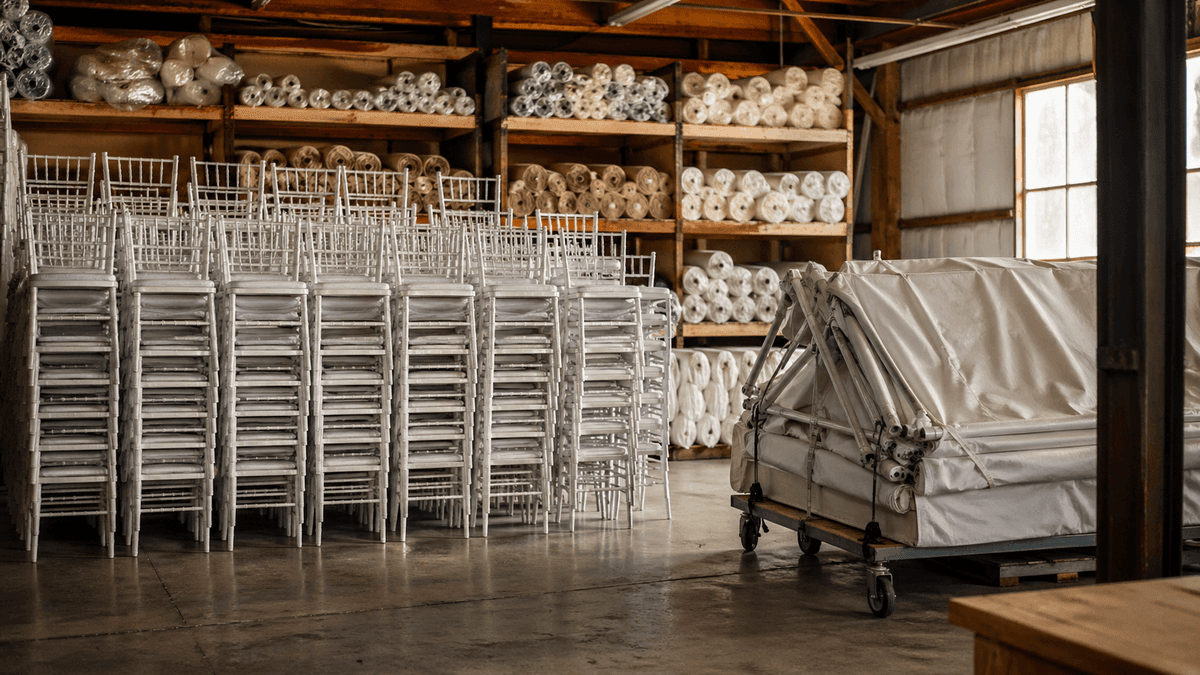
Mary started in 2022 with 60 chiavari chairs from a wholesale supplier in Atlanta and one 20×30 ft tent that fit in her two-car garage. The first customer called two weeks later — her friend's daughter was throwing a Sweet 16 and needed tables.
Three years later, Mary owns 1,200 chairs, 18 tents in various sizes, a 4,000-square-foot warehouse in Lakewood (a Denver suburb), and runs a five-person crew during wedding season. On the weekend of May 17, 2025, she serviced 11 weddings simultaneously — most within a 40-mile radius of the warehouse.
This is a story about what works in event rental and what nobody told Mary at the start. Because while equipment and construction rentals have plenty of online playbooks, the event rental industry still operates largely on intuition.
The first three months — one tent, ten customers, a lot of learning
Mary's first job: a Sweet 16 for 80 guests. One 20×30 tent, 60 chairs, 8 tables (those she borrowed from her cousin). Price: $1,400 for the full setup plus $150 for round-trip transport.
Mary and her then-fiancé (now business partner) loaded the cargo van, drove 25 miles in pouring rain, set up the tent in three hours soaked, and came back for everything Sunday morning at 11.
— I thought it was the physically hardest thing I'd ever done — she recalls. — Now I know that was the easy version. Hard started at 11 weddings simultaneously and 1,200 chairs to count Sunday night.
Three-month lessons:
One — everything is heavier than it looks. A hundred chiavari chairs weighs around 1,300 pounds. A 20×30 tent (frame, fabric, base) weighs 700 pounds. Without a forklift, hand truck, and proper loading dock, every weekend leaves you in physical therapy.
Two — customers don't think about logistics. Customers pick the chairs and the tent. They don't think about how many people you need to set it up, how long it takes, how long the haul is. Every event service is double logistics — your warehouse, then the event setup.
Three — event equipment gets damaged constantly. Wine on linens, mud on chairs, a hole in the tent fabric from sparklers, plates broken in the first hour. Without a deposit system and signed return inspections, you'll lose 5–15% of fleet value every year.
The first winter — when "seasonality" turned out to mean something else
Mary assumed "seasonality" in event rental meant May through September. That's true for revenue, but not for work.
Winter isn't downtime. Winter is:
- Inspecting, cleaning, and repairing the entire fleet after the season
- Selling and replenishing (broken chairs, washed fabrics, new tables)
- Running booth at wedding expos (January–February is when summer weddings get booked)
- Bridal show appearances at local hotels, getting added to "preferred vendor" lists
- Building relationships with photographers, florists, and caterers — because they recommend rental vendors
In March 2023, Mary started exhibiting at wedding expos in Denver. First booth fee: $1,400. She came home with 47 cards and… 8 deposits for summer weddings. The booth fee paid back after the fourth event.
— Trade shows aren't advertising — she says. — Trade shows are direct sales. The couple sees you in person and books on the spot if they trust you. Without a booth, you simply don't exist on their list.
Year two — first disaster, first processes
In July 2023, Mary serviced two weddings the same day. First in Boulder, second in Fort Collins — 60 miles apart, six hours different start times. The crew set up the first, drove to the second, and discovered the customer ordered 140 chairs, but only 80 were left in the truck.
There were 200 more chairs in the warehouse — but on the other side of Denver, 90 minutes round trip in Saturday traffic. The wedding started at 4 p.m. They were short of chairs 90 minutes before the first guest.
That was the lesson that taught Mary: without a reservation system and inventory control, event rental is a delayed-action mine. First mistake — the bride's mother became a problem, but the wedding happened. Second mistake — game over.
Mary made three changes in three weeks:
1. Online reservation system. The customer sees real-time availability. The calendar shows how many units of each item are free on a given date. If the customer wants 200 chairs Saturday and only 180 are in stock — the system says no. No "we'll figure something out" and no panic a week later.
2. Inventory after every event. Crew returns from event, counts everything, posts results to the system. Missing 4 chairs? System automatically charges a damage fee from the deposit. No "we'll count after the season" — because no one remembers in October who broke what.
3. Signed inspection sheets. Customer signs a delivery-and-return checklist at handoff. The list has photos of fleet condition and a count (e.g., "chairs: 120 units, condition: no defects"). Without it, every damage dispute is your word against theirs — and the customer always remembers it differently.
Year three — full season, full system, full crew
In 2024, Mary entered the season with everything in place for the first time.
Core inventory:
- 800 chiavari chairs (white, mahogany, silver)
- 12 tents (from 20×20 ft to 40×100 ft)
- 240 round and rectangular tables
- 1,800 plates (white, gold rim, rustic stoneware)
- 600 gold flatware sets
- 30 sets of decorative lighting
- Decorative chair covers, table runners
Premium / niche inventory (higher margin):
- 12 floral arches
- 6 stage sets (riser + lighting)
- 4 oversized "Mr. & Mrs." mirrors
- 8 decorative seating charts
Pricing strategy: 80-guest, 120-guest, 200-guest wedding packages — each priced "everything except food and alcohol." That simplifies the customer conversation (one price instead of 12 line items) and increases average order size.
Season 2024:
- 87 weddings serviced
- Average order: $5,800
- Total seasonal revenue (May–September): $504,600
- Damage write-offs: 4.2% of fleet value
- Deposits collected: $26,400 (covered 81% of damages)
What earned the most — and what surprised Mary
In theory, big tents earn the most. In practice, decorative lighting earned the most — because every wedding rented it, and the margin was the highest.
Tree fairy lights, LED votive candles, custom monogram projectors for the couple — small inventory, easy transport, minimal damage, two-hour install. Rate $400–$1,200 per package, purchase cost $3,000–$5,500, payback in 4–5 events.
Tables were the opposite: high purchase cost (one table $130), frequent damage (scratches, wine stains, broken legs), heavy transport, relatively low margin. But tables are mandatory in the package — without them, the customer doesn't book chairs.
The lesson: in event rental, there's no single "earning product." There's a package that creates customer value — and there are margin multipliers (small decorations, accessories) that add profit on top of the base offering.
What Mary wishes she'd told herself in year one
— I'll tell you what I'd know if I could go back three years — Mary says. — First: customers don't buy your pricing sheet. Customers buy your Instagram portfolio. Without photos from your own events, you don't sell the second wedding.
Second: wedding planner contracts matter from day one. A rental that gets bookings directly from end customers always has it harder than one that's "preferred" by a planner. Margin is lower (10–15% commission), but bookings are steadier and bigger.
Third: winter is preparation, not vacation. Whoever treats winter as time off loses competitively in March to whoever spent winter on trade shows, hotel contracts, and new portfolio shoots.
Fourth: online reservations aren't a "nice feature," they're foundational. Without them, you keep an inventory list in your head, get it wrong once in 50 bookings, but that's enough to destroy your reputation. The customer who finds out Friday her chairs "got booked by another couple" doesn't come back. And she tells her friends and extended family.
What Mary recommends for someone starting in 2026
First decision: specialization or generalist? Mary started as a generalist — "anything for events" — and that worked. But once she specialized in weddings, margins and bookings climbed. Specializing in corporate events, birthdays, and milestone celebrations also works — but you have to decide who your portfolio and contacts target.
Second: start with minimum, but not too little. 60 chairs and one tent isn't enough to handle a typical 80-guest wedding. Mary recommends minimum: 120 chairs, 2 tents (20×30 and 30×40), 16 tables, 200 plates. Investment cost: roughly $15,000–$22,000.
Third: buy used chairs and refurbish. Second-season chiavari chairs cost 30–50% less than new and look identical after repainting. New is for when you scale above 500 units and need a uniform palette.
Fourth: customer pays a deposit, always. 30% at reservation, balance before delivery. Managing deposits and prepayments isn't bureaucracy — it's business survival. Without a deposit, the customer cancels four days before the wedding and you're putting chairs back in the warehouse.
Fifth: start running the reservation system from month one. Don't wait until you "scale up." The habits you build in year one are the habits you'll have at event 100.
After three years, Mary doesn't regret anything — but would do some things differently
— First, I'd invest in a management system — she says. — Excel got me through the first six months, but after that it was constant ridiculous gymnastics. Second: I'd find two wedding photographers to partner with from the first season. Cross-referrals work better in this industry than any Facebook ad.
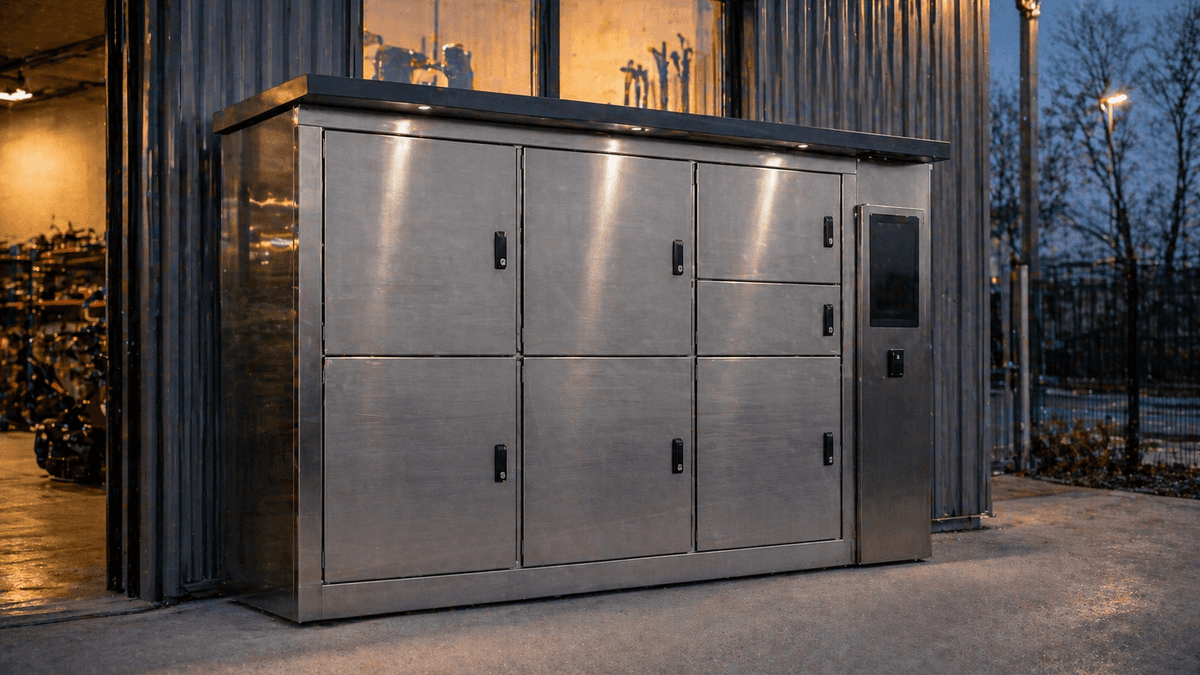
Mary is planning 2026 with a new package: contactless equipment pickup on Saturday mornings (from the customer's driver at the warehouse curb, no interaction), adding corporate events as a low-season segment, and opening a second warehouse near Colorado Springs — because Denver is starting to outgrow her current facility.
Because event rental — distinctly seasonal in nature — eventually stops being a question of "do I have inventory" and becomes a question of "do I have the logistics and processes to scale?"
That's the moment when you either have a system or you start having problems.
Start your event rental with a system from day one
Toolero handles group rentals (chairs, plates, tables), real-time availability calendars, and signed inspection protocols. Everything a starting event rental typically lacks — from your first event.