Monday, 6:40 AM, a warehouse in Memphis. Dave climbs onto the forklift, turns the key, and heads for the first pallet. He's done this for eight years, every day, on autopilot.
At 9:15, an OSHA compliance officer is standing at the dock door. Inspection. She asks for three things: the forklift's maintenance records, Dave's training certification, and the daily pre-operation inspection logs.
Maintenance records — in the office manager's desk, and she's on vacation. Dave's training certification — expired seven months ago. Daily inspection logs — nobody knows where they are.
Result: forklift taken out of service until documentation is produced. Dave removed from forklift duties until re-certified. Warehouse paralyzed for two days.
This isn't an exception. It's the norm in companies that treat forklifts like "just another piece of equipment." A forklift is one of the most heavily regulated machines in any workplace — with specific training, inspection, and documentation requirements that OSHA enforces aggressively.
Why forklifts get special treatment
Forklifts kill approximately 85 workers per year in the United States and seriously injure nearly 35,000 more. They're involved in more warehouse fatalities than any other piece of equipment.
That's why OSHA has a dedicated standard — 29 CFR 1910.178 — specifically for powered industrial trucks. It covers operator training, vehicle maintenance, operating rules, and workplace conditions. In construction, additional rules apply under 29 CFR 1926.602.
Every forklift — sit-down counterbalance, stand-up reach truck, order picker, rough terrain, electric pallet jack with a rider platform — falls under these rules. Size and lift capacity don't matter. Indoor or outdoor doesn't matter.
The only common exception: manual pallet jacks (no motor). Everything else is covered.
Step 1: Operator training and certification
Nobody drives a forklift without OSHA-compliant training. Unlike some countries, the US doesn't require a government-issued license — but OSHA's training requirements are specific and enforceable.
What OSHA requires
Under 1910.178(l), every forklift operator must complete training that includes:
Formal instruction: Classroom or online — covers truck-related topics (controls, instrumentation, steering, capacity, stability, inspections) and workplace-related topics (surface conditions, pedestrian traffic, ramps, hazardous areas).
Practical training: Hands-on exercises with the actual type of forklift the operator will use. Not a simulator — the real thing, in conditions similar to the actual workplace.
Evaluation: A qualified evaluator must observe the operator in the workplace and confirm they can operate the forklift safely.
All three components are mandatory. An online course alone doesn't cut it. A "ride-along with Steve" doesn't cut it either.
Who can provide training?
Any person who has the knowledge, training, and experience to train operators. This can be:
- An in-house trainer (often a supervisor who completed a train-the-trainer program)
- A third-party training company
- The forklift dealer
The key: the trainer must be competent, and the training must cover the specific equipment and workplace conditions.
Certification documentation
After training, you must have documentation that includes:
- Operator's name
- Date of training
- Date of evaluation
- Name of trainer/evaluator
Keep this on file. OSHA will ask for it. No documentation = no proof of training = citation.
Re-evaluation and refresher training
Operators must be re-evaluated at least every 3 years. But refresher training is required sooner if:
- The operator is observed operating unsafely
- The operator is involved in an accident or near-miss
- A different type of forklift is introduced
- Workplace conditions change (new racking, different floor surfaces, etc.)
An operator certified on a sit-down counterbalance forklift is NOT automatically certified on a reach truck or order picker. Each truck type requires specific training. If you add a new type to your fleet, existing operators need additional training before they can use it.
Step 2: Daily pre-operation inspections
OSHA requires that forklifts be examined before being placed in service each day. If used round the clock, that means before each shift. This isn't optional — it's explicitly required under 1910.178(q)(7).
The inspection takes 3–5 minutes. No tools needed. But it must be done — and documented.
Pre-operation checklist
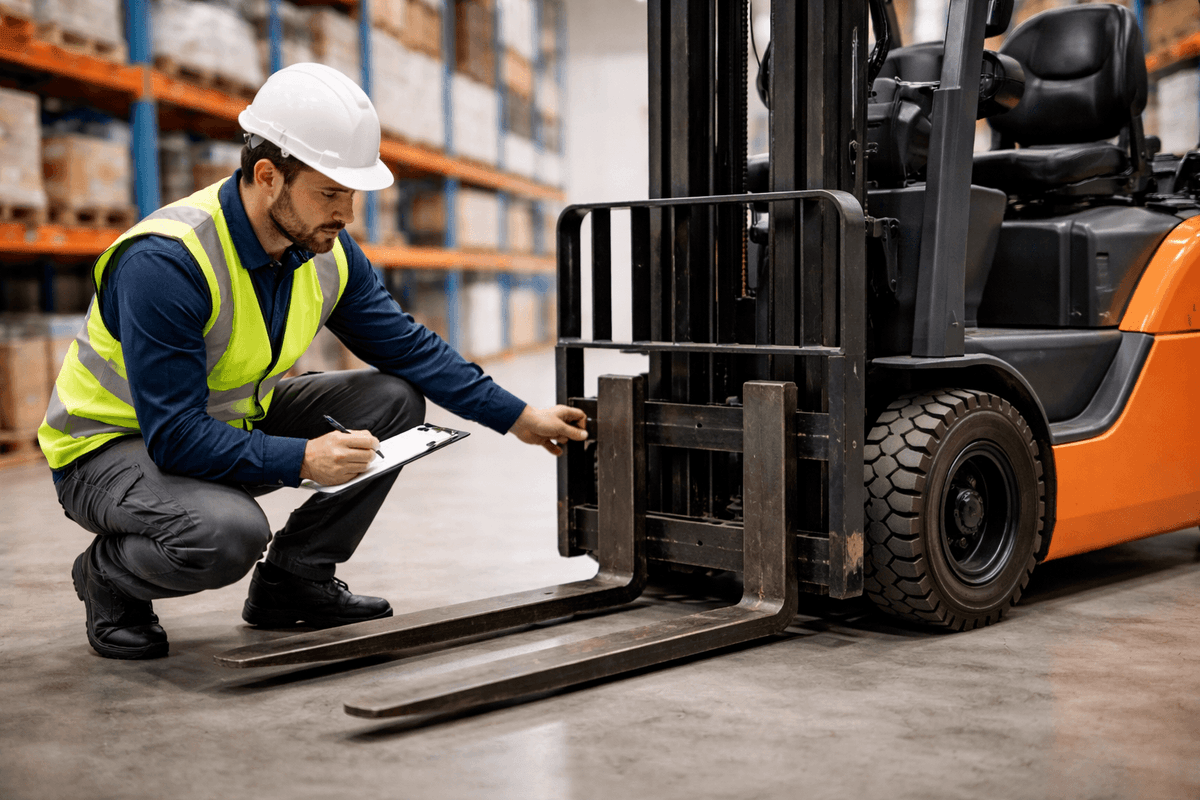
Visual check (walk-around):
- No visible fluid leaks (hydraulic oil, coolant, fuel)
- Tires — no cuts, excessive wear, or chunking (pneumatic) / no flat spots (cushion)
- Forks — straight, no cracks, no excessive wear at the heel
- Mast — no bent rails, loose chains, or damaged rollers
- Overhead guard — intact, no damage
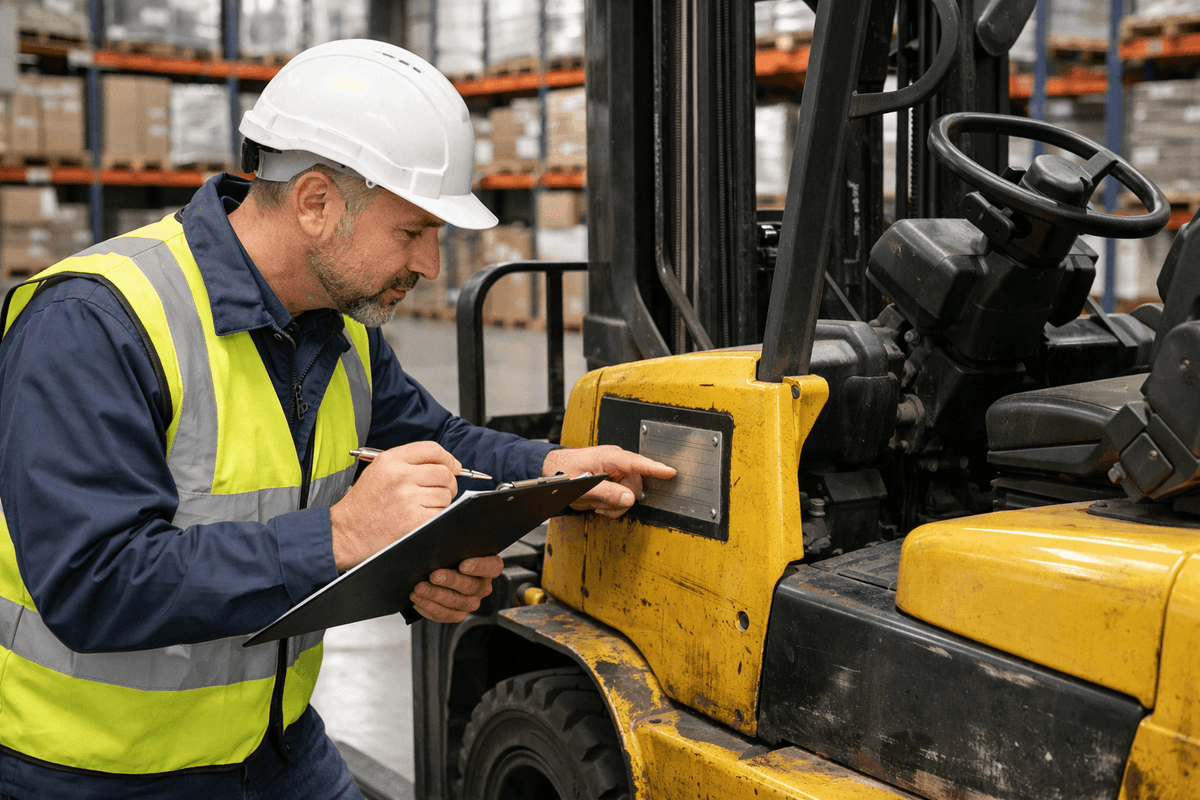
- Data plate — present and legible
- Fire extinguisher — present and charged (if required)
Operational check (with engine running):
- Service brake — stops the truck smoothly
- Parking brake — holds on an incline
- Steering — responsive, no excessive play
- Lift and lower — smooth, no jerking
- Tilt — works in both directions
- Horn — works
- Lights — work (headlights, tail lights, strobes if equipped)
- Backup alarm — works (if equipped)
- Gauges — normal readings (fuel, temperature, hour meter)
Any defect gets reported immediately. A forklift with a failed brake doesn't leave the charging area — even if "we really need to get that truck loaded."
OSHA doesn't specify the format. Paper checklists work fine. But paper gets lost, damaged, and stuffed in drawers. Digital inspection logs on a phone take the same 3 minutes but create a searchable, permanent record that you can pull up instantly during an inspection.
Step 3: Periodic maintenance
Beyond daily inspections, forklifts need scheduled maintenance by a qualified mechanic. OSHA doesn't specify exact intervals — it says forklifts must be "maintained in safe operating condition" and refers to the manufacturer's recommendations.
Typical maintenance intervals:
| Service type | Interval | Performed by |
|---|---|---|
| Engine oil and filter | Every 250 hours or 3 months | Qualified mechanic |
| Hydraulic system check | Every 250 hours | Qualified mechanic |
| Brake inspection and adjustment | Every 500 hours or 6 months | Qualified mechanic |
| Mast and chain inspection | Every 500 hours or 6 months | Qualified mechanic |
| Full service (comprehensive) | Every 2,000 hours or annually | Qualified mechanic or dealer |
| Load test (after repair) | As needed | Qualified person |
"Qualified mechanic" means someone with training and experience to service that specific type of forklift. Your general maintenance guy who "knows engines" might not qualify for hydraulic or mast work.
Every maintenance event must be documented: date, hours on the meter, work performed, who did it. OSHA and your insurance company will both want to see this.
Step 4: Workplace requirements
Operator training and equipment maintenance aren't enough. OSHA also requires safe workplace conditions:
Floor and surface conditions: Aisles must be wide enough for the forklift plus a safety margin. Floors must be maintained — potholes, debris, and wet surfaces are hazards.
Speed limits: OSHA doesn't set a specific mph limit, but requires operators to travel at speeds that allow safe stopping. Many facilities set 5 mph indoor limits.
Pedestrian safety: Designated pedestrian walkways separated from forklift traffic. Intersections marked and, ideally, equipped with mirrors or warning lights.
Load capacity: Every forklift must have a legible data plate showing its rated capacity. Operating beyond capacity is an automatic OSHA violation — and a leading cause of tip-over fatalities.
How to manage compliance across multiple forklifts
One forklift, one operator — a clipboard on the wall handles it. Three forklifts across two shifts with eight operators — that's where things break down. Because you're tracking:
- Training certification dates for each operator (different expiration dates)
- Daily inspection logs for each forklift (every shift)
- Maintenance schedules (different hour meters on each unit)
- Maintenance records (who did what, when)
- Re-evaluation due dates (every 3 years per operator)
Five forklifts × 8 operators × 3 types of records = dozens of dates that someone needs to track.
Companies handle this three ways. A spreadsheet with color-coded cells — works until someone forgets to open it. A calendar on the warehouse manager's phone — works until the manager is on vacation. An equipment tracking system with automated alerts — works regardless of who's out.
Regardless of method, one rule: every forklift must have one person accountable for its compliance documentation. If the answer is "the warehouse manager, but when he's out then Dave handles it" — nobody handles it.
OSHA penalties — what's actually at stake
OSHA penalties hit hard, and forklift violations are consistently in the top 10 most-cited standards.
Serious violation: Up to $16,131 per violation. Missing training documentation, no daily inspections, unqualified operators — each one is a separate citation.
Willful violation: Up to $161,323 per violation. If OSHA proves you knew about the requirement and chose to ignore it.
Per-instance basis: Each untrained operator is a separate violation. Five operators without current certification = five citations. At $16,131 each, that's $80,655 before you even get to the equipment issues.
Repeat violation: If you've been cited for the same standard before, penalties jump to the willful range — even if the original violation was at a different location.
Beyond fines:
- Workers' comp: Your experience modification rate (EMR) goes up after a forklift incident, raising premiums for years
- Lawsuits: In wrongful death or injury suits, OSHA violations are treated as evidence of negligence
- Criminal prosecution: In fatality cases involving willful violations, OSHA can refer to the DOJ for criminal charges (up to 6 months imprisonment under OSH Act, more under state laws)
Summary — your compliance checklist
A forklift in your operation isn't "give Dave the keys and let him drive." It's a regulated machine with specific OSHA requirements. Quick organizational checklist:
- All operators trained (formal + practical + evaluation) and documented
- Training records on file with names, dates, trainer, and truck types
- Re-evaluation scheduled within 3-year windows
- Daily pre-operation inspections happening every shift — and documented
- Maintenance performed per manufacturer's schedule by qualified mechanics
- Maintenance records kept with dates, hours, and work performed
- Data plates legible on every forklift
- Workplace conditions meet OSHA standards (aisles, surfaces, pedestrian separation)
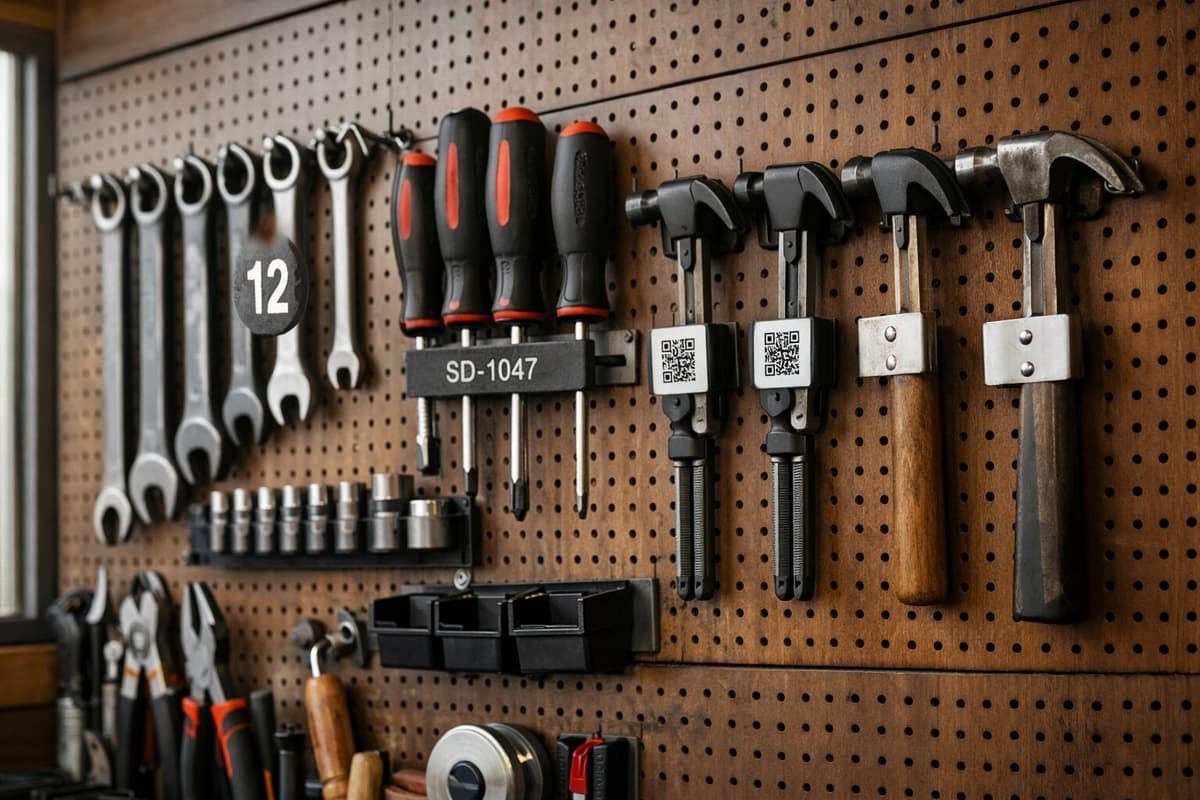
If you're labeling equipment with QR codes, your forklift is the perfect place to attach one. A quick scan pulls up the full compliance picture — training status, inspection logs, maintenance history, upcoming service dates. No digging through file cabinets while an OSHA inspector waits.
If you need a way to track inspection schedules, operator certifications, and maintenance records across your fleet, Toolero handles it automatically — alerts, history, and documentation for every machine. 14 days free, no credit card required.